
A castor oil pack is a piece of soft cotton or wool flannel soaked in castor oil, placed on the skin and usually warmed with a hot water bottle. A castor oil wrap is the modern version: a flannel belt that holds the oiled cloth in place, so you can lie down, read or sleep without the oil sliding off.
Both do the same job. This guide covers how to use each one, how much oil to use, how long and how often, and what the published research does and doesn't show.
What you need
- A castor oil pack or wrap. Organic cotton flannel. A wrap has an adjustable strap and a pouch for a hot water bottle.
- Castor oil. Cold pressed, hexane free and certified organic, because it sits against your skin for an hour or more.
- A small hot water bottle or heat pack. Optional, but most people find it far more relaxing.
- An old towel or dark sheet. Castor oil stains fabric.
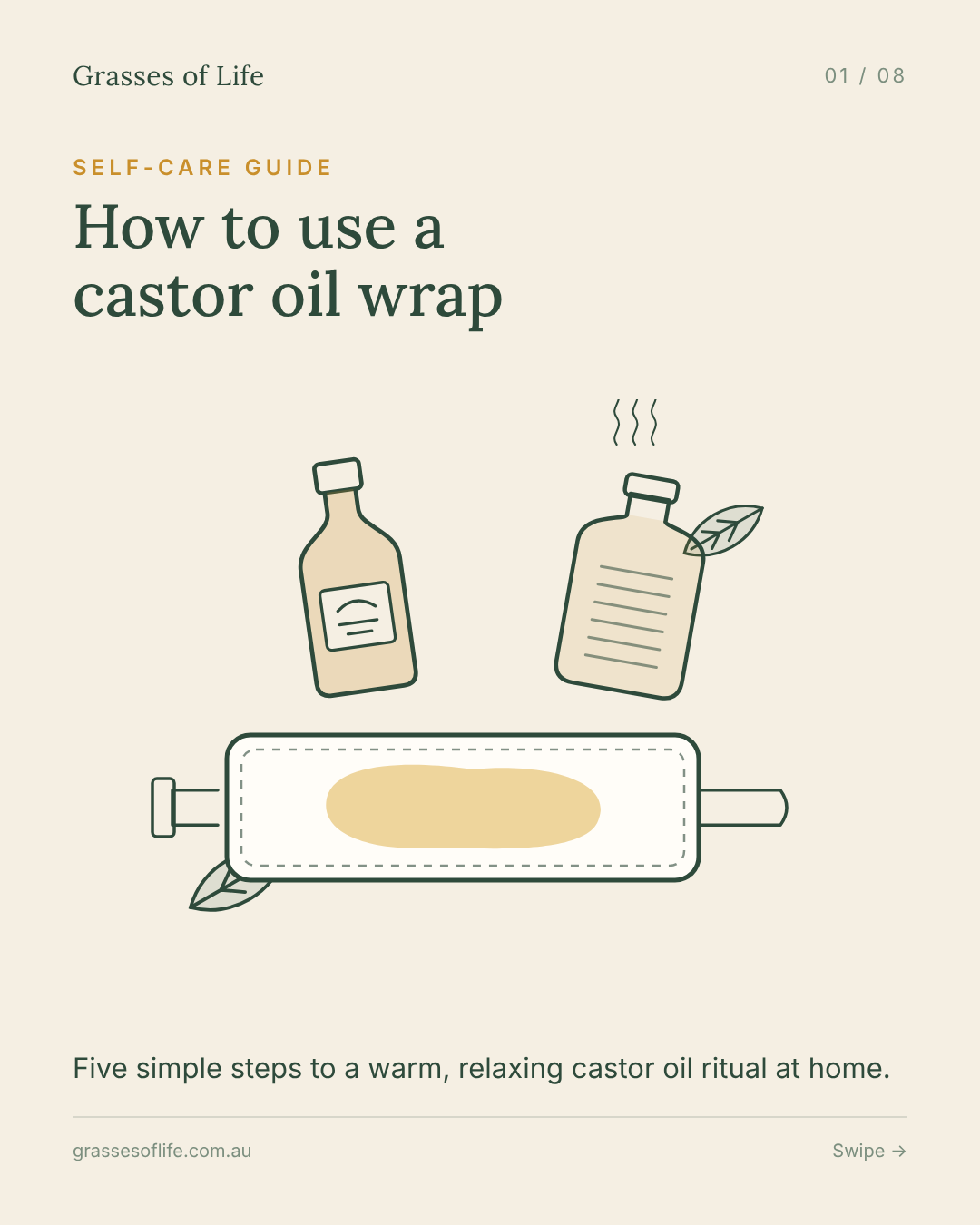
How to use a castor oil wrap
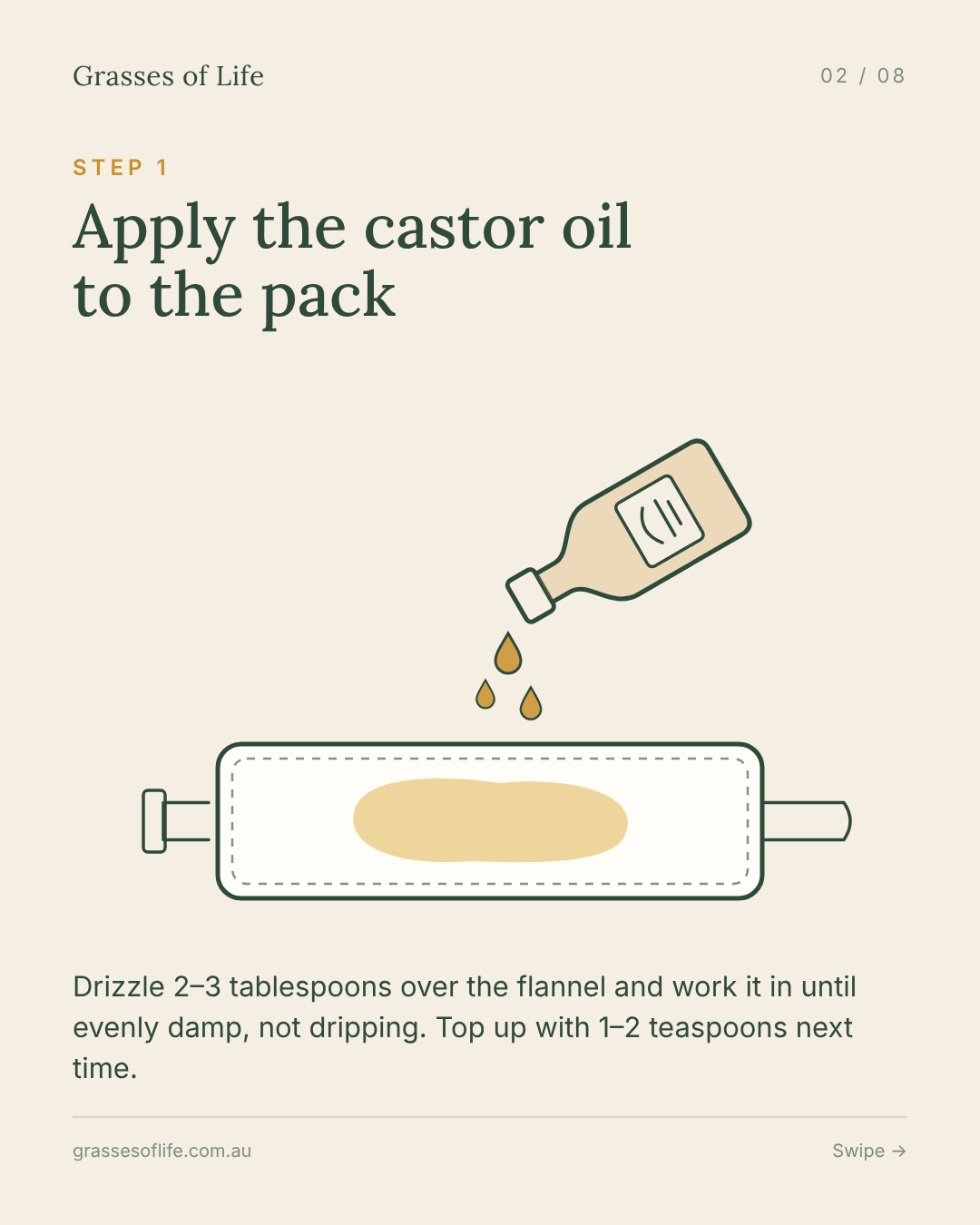
Add Organic Castor Oil
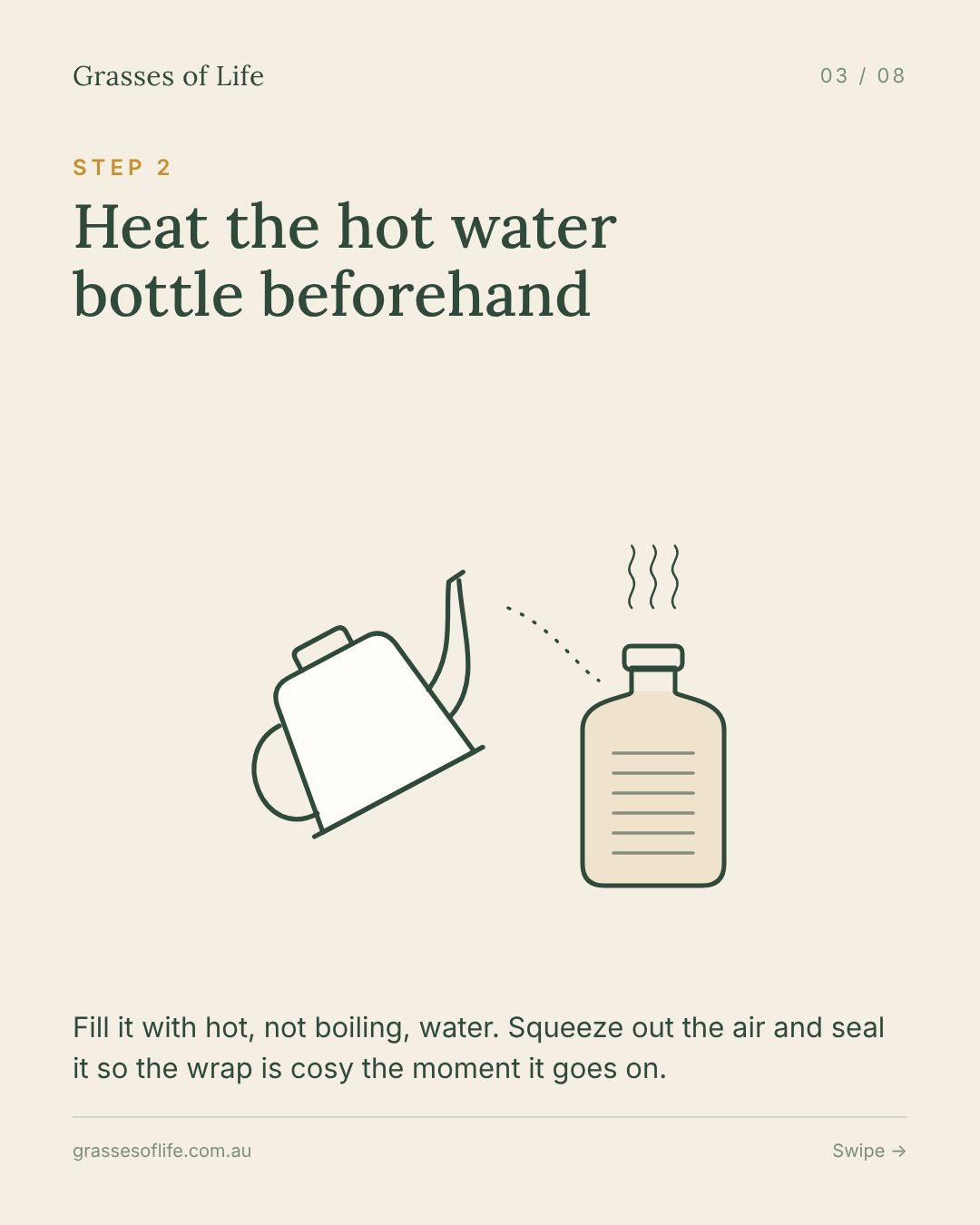
Castor Oil Hot Pack
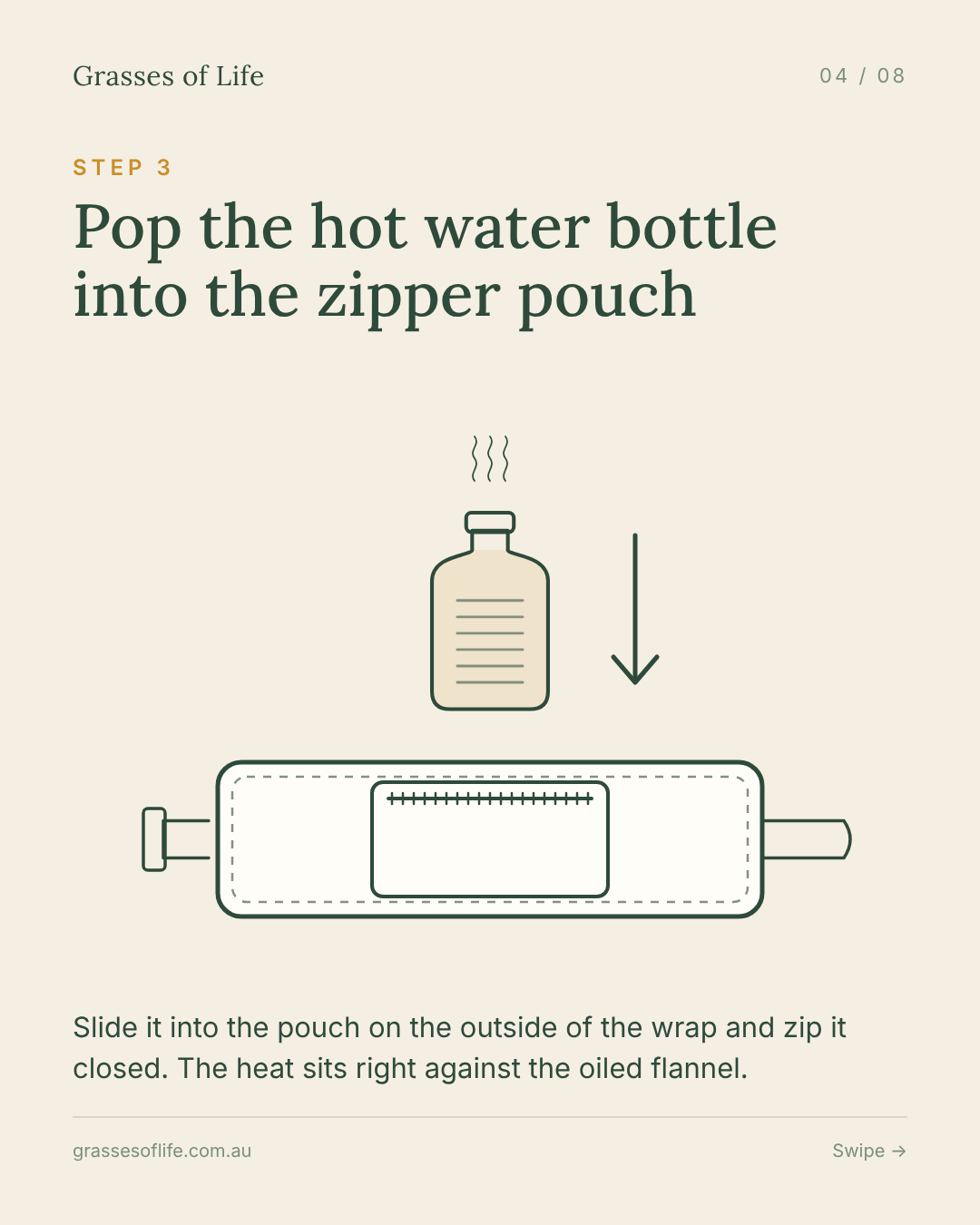
Castor Oil Wrap and Heat Pack
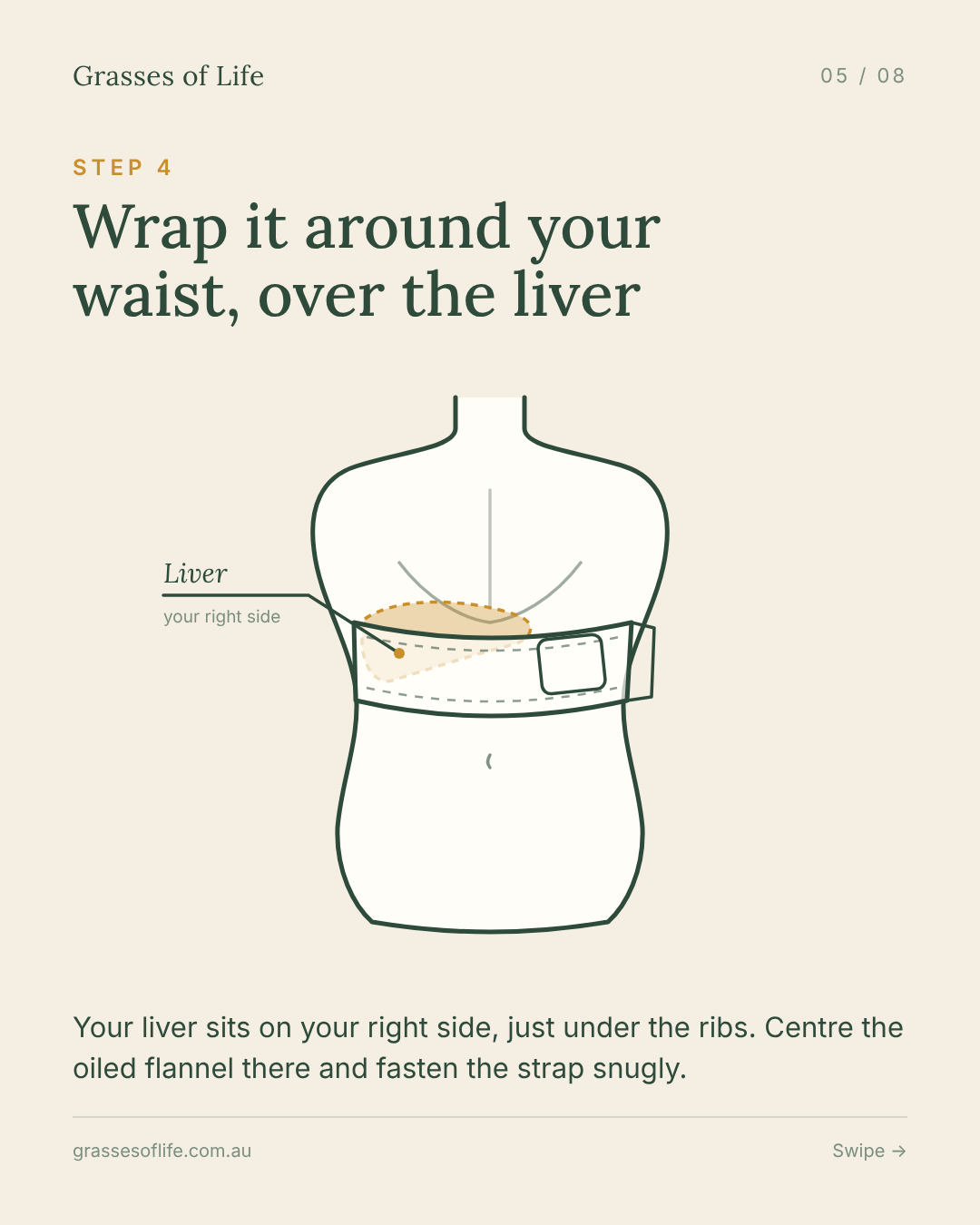
Castor Oil Liver Wrap on The Body
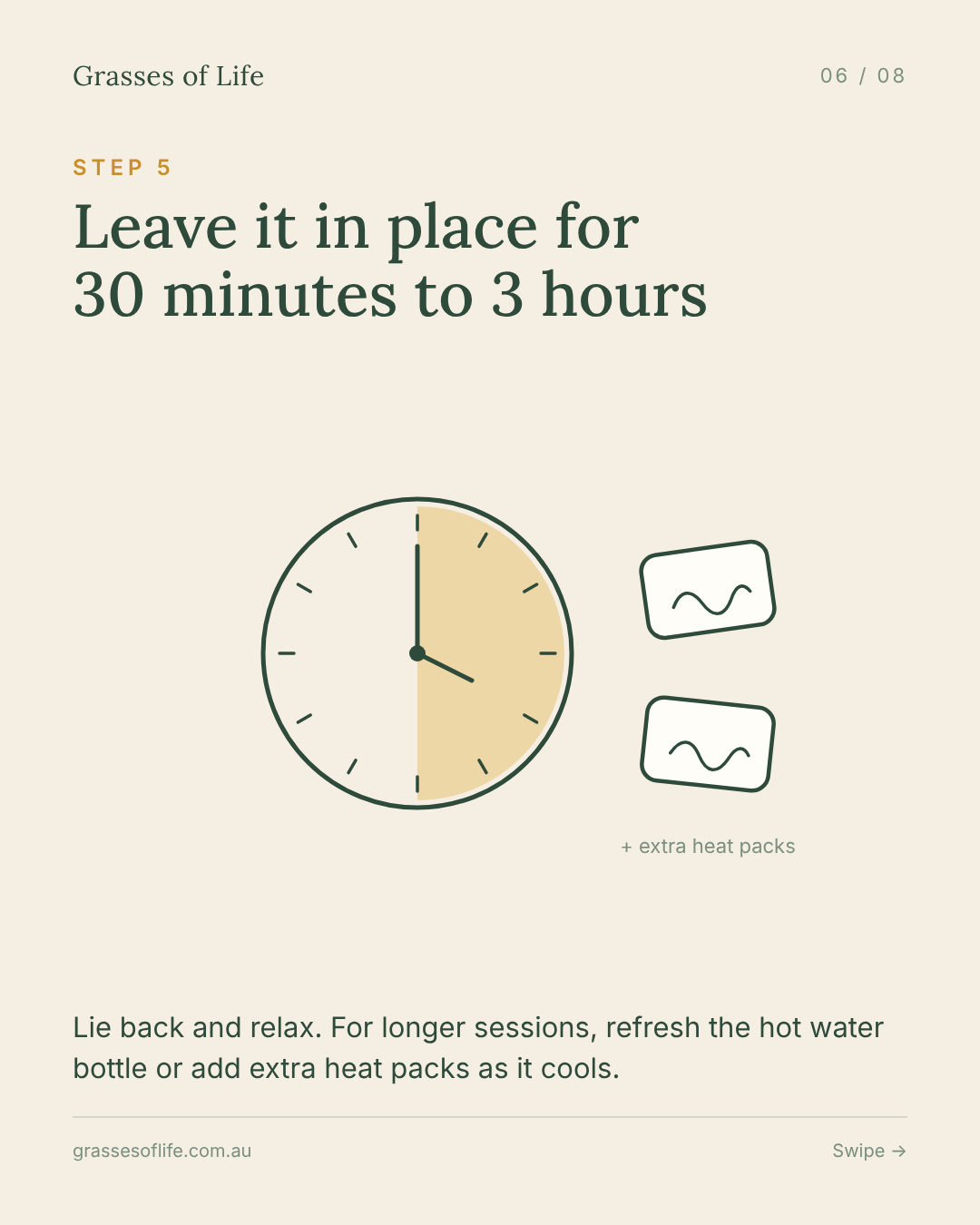
Castor Oil Pack for 3 Hours
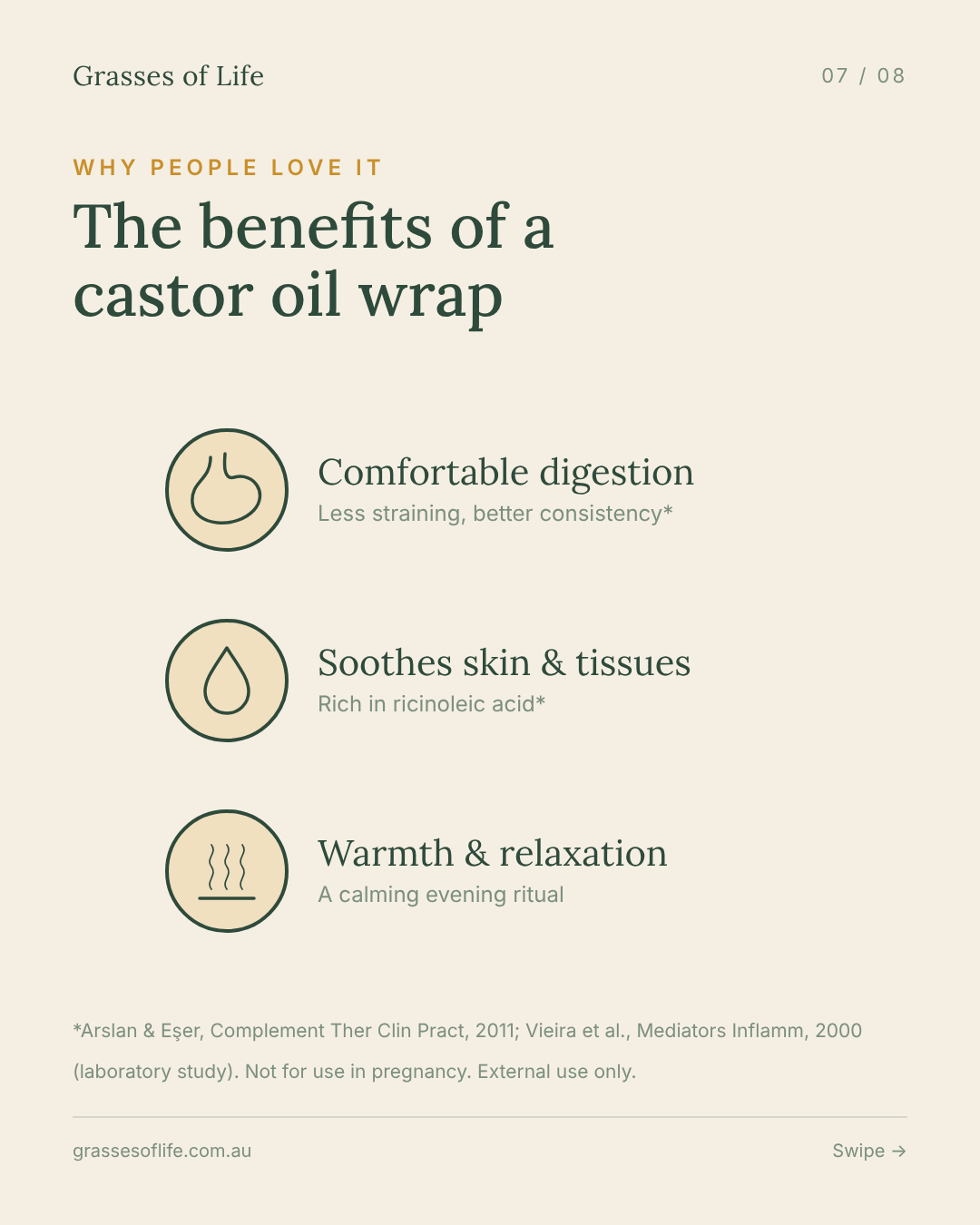
Castor Oil Wrap Benefits
Castor Oil Wrap Self Care
How to use a castor oil pack, step by step
- Oil the flannel. Lay the pack flat, flannel side up. For a new pack, drizzle about 2 to 3 tablespoons of castor oil into the centre and work it in with your fingers until the flannel is evenly damp but not dripping. A larger traditional pack may need 4 to 5 tablespoons. Keep oil away from the edges so it doesn't leak.
- Warm the hot water bottle. Fill it with hot, not boiling, water and squeeze out the air.
- Place the pack. Traditionally, the pack goes over the liver, on the right side of the upper abdomen just under the ribcage. Lay the oiled side against your skin. With a wrap, slide the hot water bottle into the pouch and fasten the belt so it's snug but comfortable. With a loose pack, cover it with a towel and rest the hot water bottle on top.
- Rest for 30 to 60 minutes. Lie back, read or relax. Some people leave a wrap on for up to 3 hours, swapping in a fresh hot water bottle as it cools.
- Clean up. Wipe leftover oil from your skin with a warm, damp cloth.
- Store and reuse. Keep the pack in a sealed bag or container in a cool place. Before each use, top it up with 1 to 2 teaspoons of oil. Adding too much makes it leak.
How often should you use a castor oil pack?
Most people use a pack 2 to 4 times a week, often in the evening. Some prefer a few days on and a few days off. Replace or wash the pack when it smells stale or feels heavy. See our guide to cleaning your castor oil pack.
Can you sleep with a castor oil pack on?
Yes, many people do, usually with a wrap because it stays in place. Remove the hot water bottle before you fall asleep, and put an old towel under you to protect your sheets.
What the research shows
The research on castor oil packs is small, and it's worth being clear about where it ends.
- Constipation in older adults. In a study of rest-home residents in Turkey, most of whom had been constipated for ten years or more, three days of castor oil packs reduced straining, improved stool consistency and improved the feeling of complete emptying. They did not change how often people went or how much they passed (Arslan & Eşer, 2011).
- Ricinoleic acid. Castor oil is 89 to 92% ricinoleic acid (Nitbani et al., 2022). In mice, eight days of repeated topical ricinoleic acid reduced inflammatory swelling and lowered substance P, a messenger involved in inflammation and pain, without the stinging of capsaicin (Vieira et al., 2000). These were animal studies. They suggest how castor oil might act, not that it does the same in people.
- Traditional use. Castor oil packs have been used over the liver for generations in naturopathic and folk practice. There are no good human trials on castor oil packs and liver function, so treat this as traditional use, not proven benefit.
For a closer look at the inflammation research, see Can castor oil reduce inflammation?
Safety: who should skip it
- Pregnant or breastfeeding: don't use a castor oil pack.
- Broken, irritated or recently treated skin: wait until it has healed.
- During heavy menstrual bleeding: many practitioners advise pausing, as heat can increase flow.
- A medical condition, unexplained abdominal pain or recent surgery: check with your health practitioner first.
- First time: patch test a little oil on your inner arm 24 hours beforehand.
- Heat: use hot, not boiling, water. Never fall asleep on a hot water bottle, and remove the pack if it gets too warm.
Castor oil packs are for external use only and aren't a substitute for medical care.
Choosing your castor oil
Because the oil sits against your skin for an hour or more, quality matters. Look for oil that is:
- Certified organic. Ours is Southern Cross Certified (SXC Cert. No. 26092).
- Cold pressed and hexane free. Ours is pressed on a low-temperature press that keeps the oil at room temperature.
- In amber glass. It protects the oil from light and avoids plastic.
- Single origin and fair trade. Ours comes from the same farms every batch and is Fair for Life certified.
References
- Arslan GG, Eşer I. An examination of the effect of castor oil packs on constipation in the elderly. Complement Ther Clin Pract. 2011;17(1):58–62. doi:10.1016/j.ctcp.2010.04.004
- Vieira C, Evangelista S, Cirillo R, Lippi A, Maggi CA, Manzini S. Effect of ricinoleic acid in acute and subchronic experimental models of inflammation. Mediators Inflamm. 2000;9(5):223–228. doi:10.1080/09629350020025737
- Nitbani FO, Tjitda PJP, Wogo HE, Detha AIR. Preparation of ricinoleic acid from castor oil: a review. J Oleo Sci. 2022;71(6):781–793. doi:10.5650/jos.ess21226