
Ferritin is the protein that stores iron in your body. Your ferritin level shows how much iron you have in reserve, and it often drops well before haemoglobin does. That’s why many women feel flat and tired while being told their blood count is “normal”.
How common is low iron in Australian women?
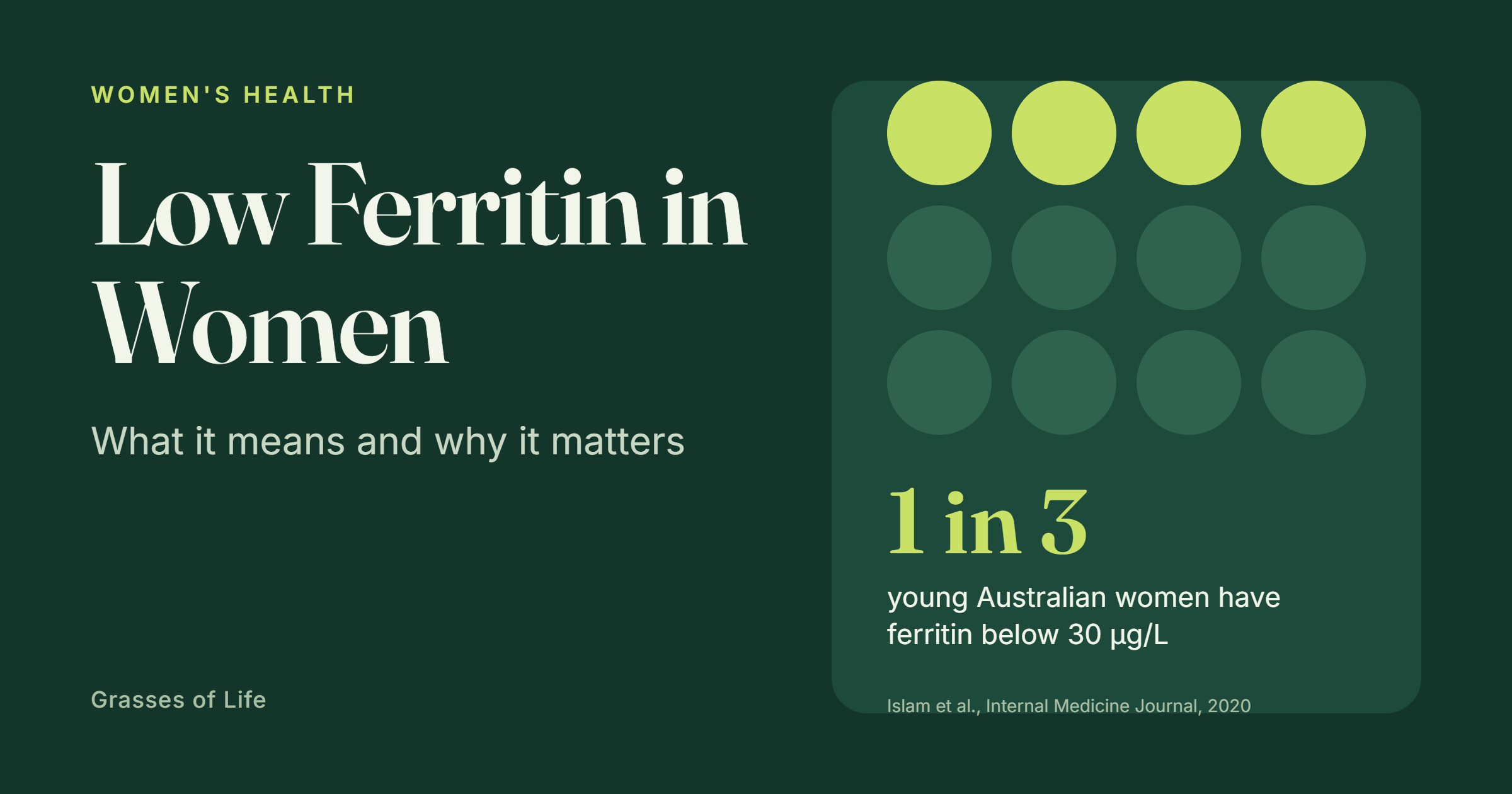
Low iron stores are more common than many people realise. One Monash University survey of women aged 18-39 found about 35% had ferritin below 30 µg/L, and national survey data shows around 14% of premenopausal women fall below 15 µg/L. Globally, the WHO estimates 30% of women aged 15-49 are anaemic.
Why women are more affected
- Menstruation: Monthly blood loss, especially heavy periods, steadily drains iron stores.
- Pregnancy and breastfeeding: Iron demand rises sharply to support the baby.
- Diet: Vegetarian and vegan diets, or diets low in red meat, provide less easily absorbed iron.
- Absorption: Gut issues, low stomach acid, coffee or tea with meals, and high calcium intake can all reduce uptake.
- Training: Endurance exercise can increase iron losses.
Common signs of low ferritin
- Persistent fatigue
- Hair thinning or shedding
- Brittle nails
- Pale skin
- Poor concentration or brain fog
- Restless legs
- Feeling cold
- Shortness of breath on exertion
These symptoms overlap with many other conditions, so testing matters.
Getting tested
Ask your GP for a full iron study that includes ferritin, not just haemoglobin. Reference ranges vary between labs, and many practitioners look closely at women whose results sit at the low end of “normal” if symptoms are present. Always find out why ferritin is low, such as heavy periods or poor absorption, rather than only topping it up.
Supporting iron intake through food
- Include iron-rich foods like red meat, lentils, spinach, pumpkin seeds and legumes.
- Pair plant iron with vitamin C (citrus, capsicum, berries) to improve absorption.
- Keep tea, coffee and dairy away from iron-rich meals.
The problem with some iron supplements
Some people find conventional iron tablets, such as ferrous sulfate, hard on the digestive system. Many women stop taking them because of this, which defeats the purpose.
A gentler option: Forage Botanical Minerals
Forage Botanical Minerals is a natural, plant-derived source of iron alongside other trace minerals. Each 5 mL serve provides 5 mg of iron, 36% of the recommended daily intake. Because it comes from a botanical source rather than a concentrated iron salt, it may be gentler on the digestive system than traditional iron supplements, which makes it worth considering for women who have struggled with them.
Always speak with your healthcare practitioner before starting any supplement, particularly if you are pregnant, breastfeeding or have been diagnosed with a medical condition.
Sources
- Islam RM et al. Iron insufficiency among young Australian women: a population-based survey. Internal Medicine Journal, 2020.
- Dietary iron bioavailability in premenopausal Australian women. Proceedings of the Nutrition Society, Cambridge University Press.
- RACGP, Iron deficiency and anaemia (gplearning.racgp.org.au).
- InSight+ (Medical Journal of Australia), 2 March 2026.